

SmokeLoader has remained relevant for years because it solves one of the most important problems in cybercrime: getting additional malicious code onto a victim’s system after the initial compromise. Security researchers describe it as a loader, downloader, and malware-as-a-service tool that can be delivered through phishing, compromised websites, exploit chains, and other malware families. Once active, it can retrieve secondary payloads that expand the attack, including credential theft tools, remote-access malware, and ransomware-related components. Recent Trend Micro reporting tied SmokeLoader to Agenda ransomware activity, while Unit 42 has also documented its use as a long-running malware loader in real-world criminal campaigns.
That makes SmokeLoader important even when it is not the final payload making headlines. In many attacks, the loader is the quiet enabler. It helps attackers establish footholds, stage follow-on malware, and turn a single infection into a broader intrusion. Proofpoint has noted more broadly that modern ransomware operations often depend on earlier access brokers and malware distributors rather than a direct one-step ransomware delivery model. SmokeLoader fits neatly into that ecosystem because it can bridge the gap between initial compromise and full-scale ransomware deployment.
What SmokeLoader Malware Actually Does
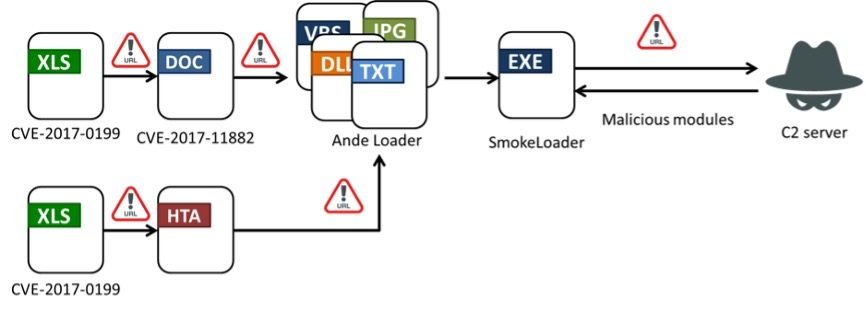
SmokeLoader is best understood as an access-and-delivery tool. Its core purpose is not simply to damage a system on arrival, but to prepare that system for whatever the operator wants next. Unit 42 describes SmokeLoader, also known as Dofoil or Sharik, as a malicious program that loads other malware, while also having a broader range of capabilities. The same report notes that it has been active for many years and has appeared across multiple campaign types and industries.
In practice, that means SmokeLoader acts like a connector inside the attack chain. It can take an already infected device and turn it into a platform for secondary payloads. Those follow-on payloads may include banking trojans, infostealers, remote administration tools, or ransomware support utilities. That design gives criminals flexibility. They do not need to commit to a single final objective at the moment of infection. Instead, they can decide later whether the compromised machine is useful for theft, persistence, lateral movement, or extortion.
Why Loaders Matter So Much in Modern Ransomware Campaigns
Ransomware is often discussed as though it arrives all at once, but many modern attacks unfold in stages. A user clicks a malicious attachment, opens a booby-trapped document, visits a compromised site, or falls for a social engineering trick. Then a loader or downloader establishes the first foothold. Only after that do the more damaging components arrive. Proofpoint’s threat research has emphasized that ransomware increasingly follows this indirect model, where initial access and malware distribution come first and the ransomware payload appears later in the attack chain.
This is why loaders matter. They help criminals separate infection from monetization. That separation is useful because it allows attackers to test access, filter victims, evade detection, and deploy different tools depending on the opportunity. A loader can also help extend dwell time on the network by quietly pulling in malware only when needed. From the attacker’s perspective, that is more efficient than firing off a loud ransomware payload immediately. From the defender’s perspective, it means early detection of the loader stage can stop a much worse event before encryption or extortion begins.
How SmokeLoader Gets Onto Victim Systems
SmokeLoader has shown up through several delivery methods over time. Unit 42 notes it has been distributed through email, exploit kits, and as a payload from other malware families. That breadth is part of what has kept it relevant. Trend Micro also reported in early 2025 that a zero-day vulnerability, CVE-2025-0411, was exploited in the wild in attacks associated with the deployment of SmokeLoader against organizations in Ukraine.
The exact infection path can vary, but the logic is consistent. Attackers want a delivery method that feels ordinary enough to get past the user or the first line of technical defenses. Once that happens, SmokeLoader gives them a way to keep the operation moving. In criminal campaigns, that flexibility is valuable because it reduces dependence on one single tactic. If phishing volumes decline in effectiveness, compromised sites, exploit activity, or chained malware delivery can still do the job.
How Criminals Use SmokeLoader to Support Ransomware
The strongest current example linking SmokeLoader to ransomware comes from Trend Micro’s reporting on Agenda ransomware activity. In 2024 and 2025, Trend Micro observed Agenda affiliates using SmokeLoader and another loader called NETXLOADER as part of their operational expansion. The company’s research describes this as part of a broader toolkit that also included defense evasion and flexible deployment methods.
That matters because it shows how ransomware actors benefit from loaders even when the loader itself is not the final extortion tool. SmokeLoader can help place additional malware onto a system, maintain access, or stage the environment for later action. In a ransomware context, that may mean preparing the victim machine with reconnaissance tools, credential theft capabilities, persistence mechanisms, or components that disable defenses before the encryption phase begins. Trend Micro’s findings underscore that ransomware crews are increasingly operationally mature, and loaders like SmokeLoader are part of that maturity.
The Role of Secondary Payloads in the Attack Chain
A loader is powerful because it turns one compromise into many possible outcomes. SmokeLoader does not need to carry the full attack all by itself. It only needs to get in and bring friends. Unit 42 notes that groups have used SmokeLoader to download other malware and use that additional malware to steal funds or deepen compromise. In Ukraine-related campaigns, CERT-UA-linked activity used SmokeLoader to deliver follow-on malware as part of financially motivated operations.
In ransomware scenarios, the secondary payload model is especially dangerous. Attackers may first deliver credential theft tools to harvest logins. Then they may deploy remote control malware or proxies to stabilize access. Finally, when the environment is understood and defenses have been weakened, the ransomware payload arrives. This layered approach helps explain why ransomware incidents often seem more sophisticated than simple “one click equals encryption” stories. The loader stage creates room for preparation.
SmokeLoader’s Value to Criminal Operators
SmokeLoader continues to appear in reporting because it offers several advantages to attackers. It is flexible, it supports malware-as-a-service style operations, and it lets threat actors reuse the same access mechanism across different objectives. Unit 42 explicitly describes it as well-known and currently active malware as a service, making it appealing to threat actors who want a practical and adaptable entry point into victims’ systems.
That flexibility is critical in today’s cybercrime economy. A criminal group may not need to write custom code for every stage of an intrusion when loaders, stealers, droppers, and ransomware payloads can be mixed and matched. Trend Micro’s Agenda reporting illustrates this operational modularity well. SmokeLoader was not necessarily the headline brand in those incidents, but it was part of what made the campaign more effective.
SmokeLoader and Ransomware Risk at a Glance
| Attack Stage | How SmokeLoader Helps | Why It Raises Ransomware Risk |
|---|---|---|
| Initial infection | Arrives through phishing, exploits, or chained malware | Creates the first foothold on the victim device |
| Payload delivery | Downloads additional malicious components | Lets attackers add tools without relying on one file |
| Persistence and access | Supports longer-term compromise activity | Gives operators time to prepare the environment |
| Credential and data theft | Can help stage stealers or other tools | Makes lateral movement and deeper intrusion easier |
| Pre-ransomware setup | Enables broader tooling before encryption | Improves chances of a successful extortion event |
This staged model reflects how many real intrusions work today: access first, tooling second, monetization last. SmokeLoader’s importance comes from where it sits in that sequence.
Why Home Users and Small Businesses Should Care
SmokeLoader is often discussed in enterprise or threat-intelligence contexts, but the lessons also matter for home users and small businesses. The same logic that makes loaders useful in targeted campaigns also makes them dangerous in opportunistic attacks. If a home computer gets infected through a malicious download, fake software update, or phishing message, a loader can quietly escalate the incident from a single bad file into a broader compromise involving stolen passwords, browser sessions, financial logins, or ransomware.
That is why prevention still matters most at the earliest stage. Security tools that detect suspicious downloader behavior, strong patching discipline, cautious handling of attachments, and careful download habits all reduce the odds that a loader gets installed in the first place. Readers comparing protection options can review our guide to the best malware removal software for a closer look at tools built to catch and remove active threats before they turn into larger incidents.
How to Reduce the Risk of Loader-Based Infections
The most effective defenses against SmokeLoader are not unique to SmokeLoader. They are the same layered controls that break common malware chains before follow-on payloads are delivered. Unit 42 recommends caution with attachments and links, sticking to trusted websites for downloads, using strong unique passwords, and staying informed about current threats. Those habits matter because loaders rely on the user, the browser, the email inbox, or the patching gap to create opportunity.
The broader lesson is simple: if you stop the loader, you often stop the ransomware before it starts. That is a useful way to think about cyber defense. The goal is not only to block the final payload, but to disrupt the chain at the earliest practical point.
Final Verdict
SmokeLoader remains important because it reflects how modern cybercrime is built. Rather than relying on one monolithic piece of malware, attackers increasingly use modular chains in which a loader gains access, retrieves new tools, and prepares the victim for deeper compromise. Trend Micro’s reporting connecting SmokeLoader to Agenda ransomware activity, along with Unit 42’s long-term analysis of SmokeLoader campaigns, shows why loaders continue to matter in both targeted and criminal operations.
For readers who want a high-authority outside reference on how ransomware attacks unfold and why layered defense matters, Proofpoint’s research on initial access and ransomware is a useful companion resource.
The key takeaway is that SmokeLoader is dangerous not because it always delivers the same payload, but because it gives criminals a reliable way to deliver whatever comes next. In ransomware operations, that makes it one of the most important malware categories to understand.