

Think your business is as secure as Fort Knox? Think again. Even unregulated industries like offshore sportsbooks understand the importance of strong cybersecurity—because one breach can be devastating. 43% of small businesses fall victim to cyberattacks, often triggered by a single phishing email. According to LP Networks, most small business owners underinvest in cybersecurity, leaving the door wide open. And IBM’s latest data shows that AI-powered threats are evolving fast and breaking through faster.
Strong digital security isn’t a luxury—it’s survival.
This is your wake-up call. We’re going to show you how to protect your business from 2025’s threats. We’ll cover:
• Affordable security solutions
• AI-powered defense systems
• Training that really works
Recent cybersecurity stats highlight the importance of protecting against human error. 74% of breaches happen because of mistakes. Are you ready to strengthen your business’s defenses? Let’s make your operation as secure as the Death Star after a successful trench run.
Why Small Businesses are Top Targets
Imagine hackers as digital pickpockets at a carnival – they’re not after Fort Knox, but the easiest mark holding cotton candy. Small businesses now face 43% more breach attempts than large corporations (Sharp Europe, 2024). This shows cybercriminals prefer easy targets over well-guarded places. Why? It’s like a Vegas magic trick – your money disappears.
Three reasons SMBs get bullseyes painted on their digital backs:
- The “Mom & Pop” Firewall Fallacy: 68% of small businesses use free antivirus software as their main defense. It’s like locking a bank vault with a Post-it note.
- Ransomware-as-a-Service Boom: Dark web entrepreneurs offer malware subscriptions for cheap, with 24/7 support.
- Data Goldmines: Your client list is a hacker’s pass to attack bigger partners in the supply chain.
Emerging threats for 2025? Imagine AI-generated deepfake invoices that fool even the best accountants. These aren’t just scams – they’re sophisticated tricks that demand urgent wire transfers during your morning coffee.
Cybersecurity expert Matt Riley says, “Your MFA hesitation isn’t just a risk – it’s literally funding hackers’ Maui vacations.” Yet, 57% of SMB owners don’t see two-factor authentication as essential.
The harsh truth? Hackers see small businesses as cyber threat practice dummies. Each unpatched software vulnerability is their batting cage. Every reused password is a master key for network moves. And that “quick email check” on public WiFi? It’s their open invitation.
Most Common Attacks on SMBs: When Digital Sharks Smell Blood
Imagine cybercriminals as digital pickpockets – except they’re not after your wallet. They want your client database, your bank credentials, and that secret sauce recipe you thought was safe in the cloud. Let’s dissect the three-headed Cerberus of modern cyberthreats targeting small businesses.
That Brooklyn bakery case? Their “special recipe” PDF attachment wasn’t Grandma’s cookie instructions – it was malware dressed in a flour-dusted apron. According to NCSC data, 43% of SMB breaches start with these “Nigerian prince meets Food Network” schemes. The hook? Urgency. “Your oven warranty expires in 24 hours!” sounds legit until you realize bakeries don’t have extended warranties on mixers.
Ransomware: Hostage Situations Without the SWAT Team
Remember the 2025 IT Governance Ltd breach? Attackers encrypted payroll data and demanded payment in Monero – the cryptocurrency equivalent of unmarked bills. Recent patterns show ransomware gangs now:
- Leak snippets of stolen data as “proof of life”
- Calculate ransoms based on company revenue
- Offer 24/7 “customer support” for decryption issues
| Attack Type | Delivery Method | Avg. Downtime | Detection Difficulty |
|---|---|---|---|
| Phishing | Fake invoices | 18 hours | ★★★☆☆ |
| Ransomware | Malicious ads | 6.2 days | ★★★★☆ |
| Supply Chain | Compromised vendors | 11 days | ★★★★★ |
Spotting malicious files isn’t rocket science – it’s closer to authenticating Banksy murals. Does that PDF from “UPS” have metadata listing its creator as “xXx_HackerDad_xXx”? Red flag. Is the email’s “From” address misspelled like a drunk Scrabble play? Double red flag.
Here’s the bitter espresso shot of truth: 68% of ransomware targets are businesses with under 200 employees (IT Governance, 2025). Why? We’re the low-hanging fruit in the cyber orchard – but with these best practices SMB leaders can implement, you’ll be more porcupine than peach.
Simple, Effective Protections: Step-By-Step Guide
Do you think you need a lot to protect your business? Think again. Cybersecurity is not about building huge walls like Winterfell. It’s about using smart defenses and keeping watch.
Let’s give your business tools that would impress Game of Thrones blacksmiths. But we won’t spend as much as they did on dragon glass.
The Budget Defender’s Toolkit
Don’t spend more than your coffee money on your first defense. Here’s how to strengthen your defenses:
- Firewall Foreplay: LP Networks’ free templates make your router a digital guard – no need for a CISSP
- Microsoft 365’s Secret Sauce: Use “Attack Simulation Training” to make Outlook a cybersecurity gym
- Backup Ballet: Save data automatically with Duplicati (free) – no need for a Riverdance emergency
Training Humans 101
Your employees are smart – they just don’t get paid to worry about crypto-jacking. Here are some easy tips:
- Do monthly “Spot the Phish” drills with real scam emails (get points for Nigerian prince ones)
- Make password policies easy to remember – like “PizzaLover1984!” instead of “P@55w0rd”
- Start a cybersecurity swear jar – pay $1 each time someone clicks something weird
Good security is like wearing underwear. It should fit well, change often, and never be shared. Now, go protect your kingdom – winter and ransomware are coming.
Creating an Incident Response Plan (Without the Jargon)
Imagine your business gets hacked. Do you panic or move with precision? A good incident response plan turns chaos into order. We’ll make yours using NCSC templates and timelines that won’t bore your team.
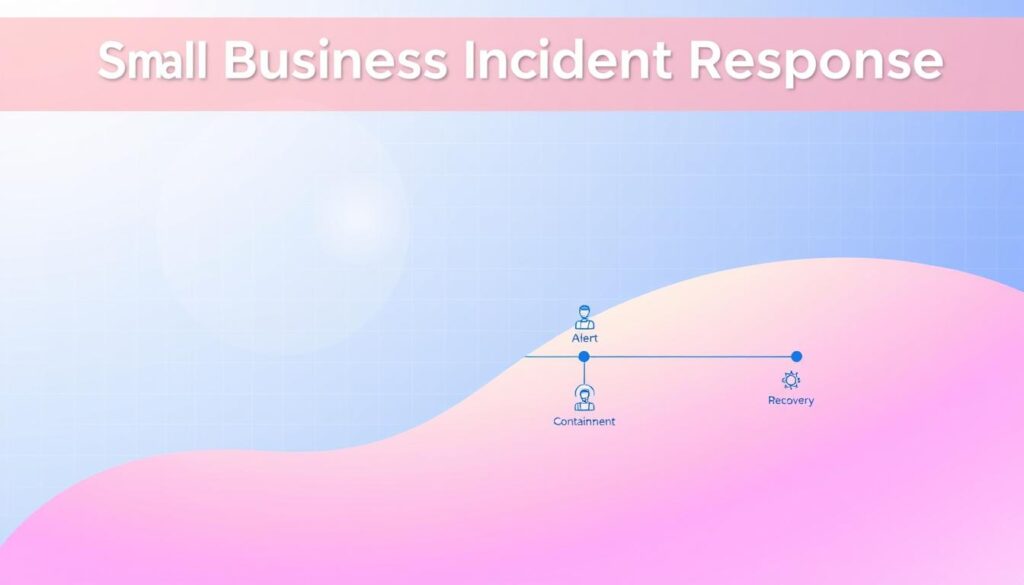
- Identify the Threat: Is it ransomware or phishing emails? Treat it like a suspicious Tinder date – verify before engaging.
- Contain the Damage: Disconnect affected devices fast. Cybersecurity expert Callum Siciliano says, “Unplug first, ask questions later.”
- Eradicate & Recover: Use backups to restore systems. Then, hunt for digital clues left by attackers.
- Post-Mortem Analysis: Debrief over coffee (or whiskey). Document lessons learned like a Yelp review for cybercriminals.
| Incident Type | Average Recovery Time | Key Action |
|---|---|---|
| Ransomware Attack | 3-7 Days | Isolate backups first |
| Phishing Breach | 24-48 Hours | Reset all credentials |
| Data Leak | 1-2 Weeks | Notify customers within 72hrs |
Businesses with tested response plans recover 65% faster. Run drills disguised as team-building exercises. Store physical copies of your plan, because printers won’t get hacked.
Remember: Your plan should be simple. If it’s hard to understand, you’ve failed. Update it often – with new hires, software upgrades, or that sketchy coffee machine.
Compliance Basics: Navigating Legal Minefields Without Losing Your Sanity
Do you think compliance is just about following rules? Think again. Last year, 63% of small businesses faced fines for data protection oopsies. It’s like trying to understand Taylor Swift’s lyrics about ex-boyfriends.
The 2025 CCPA amendments are strict. Starting January, California will require:
- 72-hour breach notifications (down from 15 days)
- Mandatory dark web monitoring for companies storing 50k+ records
- $7,500 per violation penalties for cookie consent errors
HIPAA’s new rules are like a spy novel. They now demand:
| Requirement | Old Rules | 2025 Update |
|---|---|---|
| Data Encryption | Recommended | Mandatory for all ePHI |
| Access Logs | 6-month retention | 2-year retention + geo-tracking |
| Third-Party Vendors | BAAs optional | $10k fines per unvetted contractor |
Three compliance traps to watch out for:
- Cookie banners that collect data even after you say no (the “dark pattern” ambush)
- BYOD policies without MDM software (HIPAA’s favorite gotcha)
- Cloud backups without checking data sovereignty (CCPA’s new pet peeve)
Pro tip: Compliance audits are like dental checkups. They’re awkward but cheaper than dealing with bigger problems. Schedule quarterly reviews of:
- Vendor security assessments
- Data retention timelines
- Employee access privileges
Remember when Facebook thought “I Agree” buttons were foolproof? Neither do their lawyers. Stay ahead of cybersecurity legislation updates by subscribing to FTC alerts. It’s less dramatic than learning about new rules from a lawsuit.
Case Stories: Businesses that Got It Right
Imagine a Rocky story, but with small businesses fighting off phishing scams. Let’s look at how some businesses turned the tables on cyber threats.
Meet Powell’s Paperback Protectors: A Portland indie bookstore that became a phishing-fighting force. They faced 427 suspicious emails in just three weeks. But it wasn’t AI that saved them – it was Martha, a 72-year-old cashier.
Martha used Gmail’s free reporting tools and her sharp instincts to flag 98% of the threats. She had seen it all before. The result? No breaches and no cost.
Lone Star Bakery in Austin faced a ransomware attack from a Russian hacker. But owner Javier Cortez had a plan. He restored his recipe database from handwritten index cards his abuela kept.
“Hackers want digital hostages? We’ll fight analog,” Javier told NCSC investigators. Now, they use two-factor authentication and keep their recipes in a fireproof vault.
IT Governance Ltd’s data shows a clear pattern. Businesses that use free security tools and train their employees well block more attacks. It’s all about combining tech with human smarts.
The takeaway? You don’t need a huge budget to fight cyber threats. Martha’s quick thinking, Javier’s grandma wisdom, and a healthy dose of skepticism can go a long way.
FAQ: Ask the Expert
Why do hackers want your cupcake recipes? Let’s slice through the paranoia with insights from cybersecurity strategist Callum Siciliano and Sharp Europe’s eye-opening SME survey data.
“Can I just unplug everything and call it a day?”
Sure – if you want your business to operate like a 1995 dial-up connection. Siciliano compares this to “using a horse-drawn carriage to avoid car accidents.” Instead, focus on multi-factor authentication and encrypted cloud backups. Bonus: Your team can use the Wi-Fi.
Absolutely. That internet-connected appliance has more computing power than NASA’s 1969 moon landing tech. Sharp Europe found 43% of SMB breaches start through non-traditional devices. Solution: Create a separate guest network for IoT gadgets – your cheese drawer doesn’t need VIP access.
“We’re too small for compliance headaches, right?”
Wrong. Regulatory frameworks like CCPA apply to any business handling Californians’ data – even if you’re selling beach towels from a garage. Our cybersecurity guide for SMBs breaks this down without the legalese.
| Myth | Reality | Cost to Fix |
|---|---|---|
| “Cybersecurity requires enterprise budgets” | Free tools like DNS filtering block 90% of basic threats | $0-$50/month |
| “Hackers only want credit cards” | Employee payroll data is 3x more valuable on dark web | 1 hour to encrypt files |
| “Insurance covers all breaches” | 63% of claims get denied for basic security lapses | 15-min policy review |
“How do I train employees without tech speak?”
Turn phishing tests into office bingo. Reward teams for spotting suspicious emails with coffee coupons. Siciliano’s clients saw 72% faster threat reporting using this affordable protection tactic versus traditional lectures.
Remember: Security for small business isn’t about building Fort Knox. It’s about making your digital backdoor slightly less inviting than the competition’s. Now go forth – your smart thermostat awaits its firewall.
Final Checklist
Think of this as Marie Kondo’s method for your digital clutter – except instead of tidying socks, we’re bulletproofing your business. The NCSC’s Essential Eight framework meets LP Networks’ audit templates in this no-BS protocol for achieving cost-effective security without hiring a Silicon Valley guru.
Start here: 1) Enable multi-factor authentication (Google Authenticator beats carrier pigeons). 2) Patch systems faster than Taylor Swift drops surprise albums. 3) Conduct weekly backups – Microsoft 365’s version history could’ve saved Hamlet’s family drama. 4) Train teams to spot phishing lures better than reality show contestants sniff out betrayal. 5) Encrypt sensitive data like it’s nuclear launch codes. 6) Segment networks like a Vegas buffet prevents cross-contamination.
Phase two: 7) Run vulnerability scans quarterly – your tech stack isn’t a “set it and forget it” rotisserie. 8) Limit admin privileges tighter than White House press credentials. 9) Deploy DNS filtering (Cloudflare’s gateway turns sketchy sites into digital Roombas). 10) Document incident response plans clearer than IKEA instructions. 11) Audit third-party vendors like a Michelin inspector. 12) Test disaster recovery scenarios until your team can execute them mid-Zombie Apocalypse.
LP Networks’ free audit template turns this checklist into actionable SMB privacy armor. Print it. Frame it. Make interns recite it. Because in cybersecurity, being prepared beats being sorry – just ask anyone who’s faced ransomware wearing a “This Could’ve Been an Email” T-shirt. Ready to transform your digital defenses from amateur hour to Mission Impossible precision?