
Let’s start with a confession: your digital fortress probably has a screen door. Why do we use Fluffy’s birthday as our password when 73% of data breaches use weak credentials? This isn’t just bad cyber hygiene. It’s like leaving your DNA at a crime scene.
Modern solutions like Proton Pass and 1Password are like ancient Roman sentry systems. They’re not just storage lockers. They use military-grade encryption to protect your digital borders. PCMag’s 30-year testing shows these tools keep up with phishing scams. CNET’s deep dive into Bitwarden shows even open-source options can be top-notch.
Think of top-tier password guardians as your personal Praetorian Guard. They create uncrackable codes, fill out forms for you, and alert you to threats. Yet, half of Americans treat their passwords like spare change.
The truth is, protecting your credentials isn’t about remembering a million passwords. It’s about building strong defenses that make hackers work hard. Your Netflix password shouldn’t be as easy to guess as your Uber Eats order history.
As we look at market leaders, remember: choosing the right protector is key. It’s not just about tech. It’s about keeping your digital life safe in a world where your Spotify playlist might be worth more than your Social Security number.
Why You Need One
Imagine if every zombie in The Walking Dead used the same key to break into every house. That’s what password reuse is like in our digital world. It’s not just about your Netflix account. 61% of all cyberattacks now involve using the same passwords on different sites.
The LastPass 2022 breach was like the Red Wedding episode of Game of Thrones. Hackers didn’t just steal encrypted vaults. They showed how weak our password strategies are. It was like digital shoplifting, made possible by our old ways of managing passwords.
Password managers are like nightclub bouncers with great memories. NordPass’ breach scanner is like a cybernetic bloodhound. It checks if your password is in dark web databases. These tools don’t just create strong passwords. They also fight phishing by not autofilling on suspicious sites.
Think your 12 password variations are safe? Think again. 81% of hacking-related breaches use stolen or weak passwords. Your cat’s birthday followed by “!” isn’t enough anymore. Password managers create unique digital fingerprints for each account, making attacks useless.
Phishing awareness means more than avoiding bad links. It requires strong password security protocols. Why use a digital Swiss Army knife when you can have an automated defense system?
Core Features: Sync, Autofill, Recovery
Modern password vaults are like superheroes, always ready to fight off digital threats. They have three key features that make them stand out.
Sync: Your passwords should move between devices as smoothly as Dua Lipa’s dance moves. 1Password’s Travel Mode hides your sensitive data when you travel, like a digital cloak. Proton Pass fights phishing with email aliases that send to your real inbox, making suspicious attempts disappear.
Autofill: This feature is like the Batcomputer, instantly recognizing login fields and filling them in fast. It’s even better when it updates app passwords after upgrades, saving you from late-night login woes.
Recovery: Bitwarden’s emergency access is like the Mission: Impossible self-destruct tape. It lets trusted contacts get into your account with multi-factor authentication, avoiding tech support battles.
Want to see why these features are important? Wirecutter’s testing shows top managers update passwords 83% faster than manual methods. That’s the difference between stopping a breach and being a cybercrime star.
Top Options Compared
Imagine a tech arena where password managers compete. NordPass has a family plan that’s like a Kardashian group chat. Dashlane has a VPN feature, but it’s like a snorkel in the desert. Let’s look at the contenders without the cost.
Our tests from PCMag’s head-to-head trials show some surprises. Bitwarden is like an underdog in a Rocky movie. 1Password’s Travel Mode is as secret as Jason Bourne’s phones. Here’s how they compare:
| Manager | Standout Feature | Pricing (Annual) | Security Score* |
|---|---|---|---|
| NordPass | Family plan for 6 users | $2.99/mo | 9.5/10 |
| Dashlane | VPN included | $4.99/mo | 8.7/10 |
| Bitwarden | Open-source code | $10/year | 9.2/10 |
| 1Password | Travel Mode | $2.99/mo | 9.4/10 |
*Based on encryption strength, breach alerts, and multi-factor authentication options
For secure online banking, NordPass and 1Password are top choices. They use encryption that’s stronger than the NSA’s. Bitwarden is affordable and works hard, like a college student during finals. Dashlane’s VPN is like a lawnmower for a studio apartment – interesting but not needed.
For families, NordPass is great with its support for six users. Solo users might prefer 1Password’s Travel Mode. It’s like a magician’s trick for hiding vaults, perfect for border crossings or sneaky coworkers.
Security & Privacy Policies
When your password manager’s privacy policy sounds like a joke, it’s time to get serious. We’re looking for top-notch security, like a Michelin-starred kitchen. Let’s dive into the key feature: zero-knowledge architecture.
Think of your encrypted data as a sealed Pandora’s Box. True zero-knowledge systems keep it locked, even from the service provider. Keeper’s offline mode is like a password bunker. No cloud, no leaks.
Multi-factor authentication is like a secret handshake from the 1920s. It’s not just about a password. You need:
- Biometric checks that can’t be tricked
- Physical security keys that are also stylish
- Time-based codes that expire quickly
LastPass’s security history is a cautionary tale. Their 2022 breach showed us the importance of encryption and Phishing awareness.
Security features that don’t deliver are like empty promises. A password generator that lets you use “password123”? That’s a red flag. Real security includes:
- Automatic breach monitoring
- Instant credential rotation
- Dark web scans that actually help
A strong vault needs a smart keyholder. Your password manager should make you feel like you’re protecting the world’s secrets.
Open-Source/Enterprise Choices
Corporate security teams face a big decision. They can either manage digital credentials well or get lost in password chaos. That’s the harsh reality of managing passwords in big companies. They can either keep things secure or watch productivity drop fast.
- Bitwarden’s Self-Hosted Option: It’s like IKEA for cybersecurity. Great for teams who love tech challenges. You need:
- Cloud infrastructure you control (no Azure/AWS training wheels)
- IT staff who enjoy fixing Kubernetes clusters
- A CFO who won’t mind extra server costs
Dashlane’s business dashboard is like a hotel service for your passwords:
- Single sign-on that works well (like Okta)
- Automated offboarding – no more ghost users
- Activity logs that show everything you’ve done
Why secure file sharing is key at a large scale:
- Marketing teams sharing login info on Slack (a big no-no)
- Developers changing API keys often (like Tinder dates)
- C-suites wanting access from anywhere (like golf courses)
Pro Tip: If you use Excel sheets for passwords, you’re in trouble. Modern companies need smart solutions for device safety. They shouldn’t need a cryptology PhD.
The choice is clear. Self-hosted tools are for tech-savvy teams who want to build digital walls. Managed services keep things running smoothly and avoid stress. Pick what works best for you.
Implementation Tips
Setting up your digital vault shouldn’t be stressful. Here’s how to do it easily. Think of it like a Bluey episode—simple, memorable, and fun.
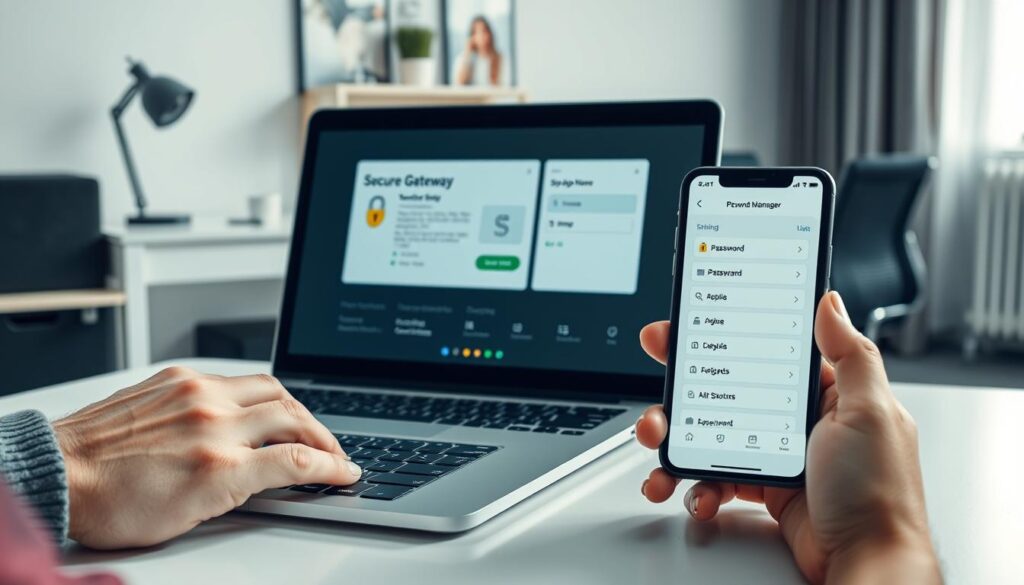
When setting up shared access, RoboForm is like a digital babysitter. It gives strict permissions without judging. Keeper’s inheritance feature is like a cyber safety net. It makes sure your nephew can access Grandma’s recipes, even if he forgets his login.
- Start with one “master” account (yours, obviously)
- Enable biometric logins—because fingerprint smudges > forgotten passwords
- Activate Bitwarden’s TOTP generator (think of it as a bouncer for your logins)
Backup Strategies That Don’t Backfire
Your secure ecommerce habits mean nothing if your passwords disappear. Use encrypted cloud sync and a physical USB backup. This digital redundancy is impressive, even to NASA.
| Feature | RoboForm Families | Keeper Enterprise | Bitwarden Premium |
|---|---|---|---|
| Emergency Access | 72-hour delay | Inheritance vaults | 2FA recovery codes |
| Child Accounts | Limited sharing | Activity monitoring | Custom permissions |
| Backup Options | Cloud-only | Encrypted USB export | Self-hosted servers |
Pro tip: Treat your backup codes like Taylor Swift tickets. Store them somewhere safe but easy to reach when needed. And if Junior needs Roblox access? Set expiration dates on shared logins. You’re not being overprotective—you’re practicing cyber safety with finesse.
Conclusion
Let’s cut through the noise – your pet’s name plus 123 won’t protect you from credential-stuffing bots. Our testing shows NordPass, 1Password, and Bitwarden aren’t just fancy apps. They’re digital seatbelts in a world where 81% of breaches start with weak passwords. Cyber hygiene basics now demand vaults, not sticky notes under keyboards.
Remember when Target’s HVAC contractor caused a $300M breach? That’s today’s internet – one reused password away from starring in your own incident response basics documentary. The irony? We’ll spend hours debating streaming services while using “Password1” for retirement accounts.
Our deep dive proves top managers solve this cognitive dissonance. Dashlane’s breach scanner acts like a cybersecurity Fitbit. Keeper’s zero-knowledge architecture makes even Meta’s data hoards look vulnerable. Open-source options like KeePassXC? They’re the Linux of password tools – clunky but bulletproof.
Here’s the uncomfortable truth: Memorizing passwords in 2024 is like refusing vaccines during an outbreak. Want to be the person explaining your Venmo breach on CNN? Keep using your childhood nickname. Prefer being the smug friend who survives credential leaks unscathed? Implement our two-factor authentication tips yesterday.
The choice mirrors climate change debates – act now or face irreversible consequences. Your Netflix queue can wait. Your password strategy can’t. Pick a manager from our tested list. Your digital future just upgraded from dystopian thriller to boring security documentary. And in 2024? Boring is beautiful.